H-1B Grace Period Stress: A Job Search Plan for the 60-Day Clock
A 60-day clock can make every hour feel loud. The goal is not to panic faster. The goal is to turn the clock into a plan.
Key takeaways
USCIS describes an up-to-60-day discretionary grace period for several nonimmigrant classifications, including H-1B, or until the authorized validity period ends, whichever is shorter.
Job-search speed matters, but so do legal options and clean documentation.
A high-quality application agent can help create more sponsor conversations while the candidate pursues legal advice.
Important note before anything else
This article is job-search guidance, not legal advice. Immigration facts are personal and deadline-sensitive. If you are in an H-1B grace period or expect termination, speak with a qualified immigration attorney as early as possible.
USCIS has described an up-to-60-day discretionary grace period for workers in classifications including H-1B after cessation of employment, or until the end of the authorized validity period, whichever is shorter. Your exact options depend on your status, dates, employer actions, petition history, family situation, and backup pathways.
The emotional reality
H-1B job loss is not only career stress. It is housing stress, family stress, identity stress, and calendar stress. Friends may say "just apply more," but a visa-clock job search is different. You need speed, sponsor fit, document readiness, and parallel planning.
The first win is to stop treating the situation as one giant emergency. Break it into lanes: immigration advice, sponsor targeting, application volume, referrals, interview readiness, and backup options.
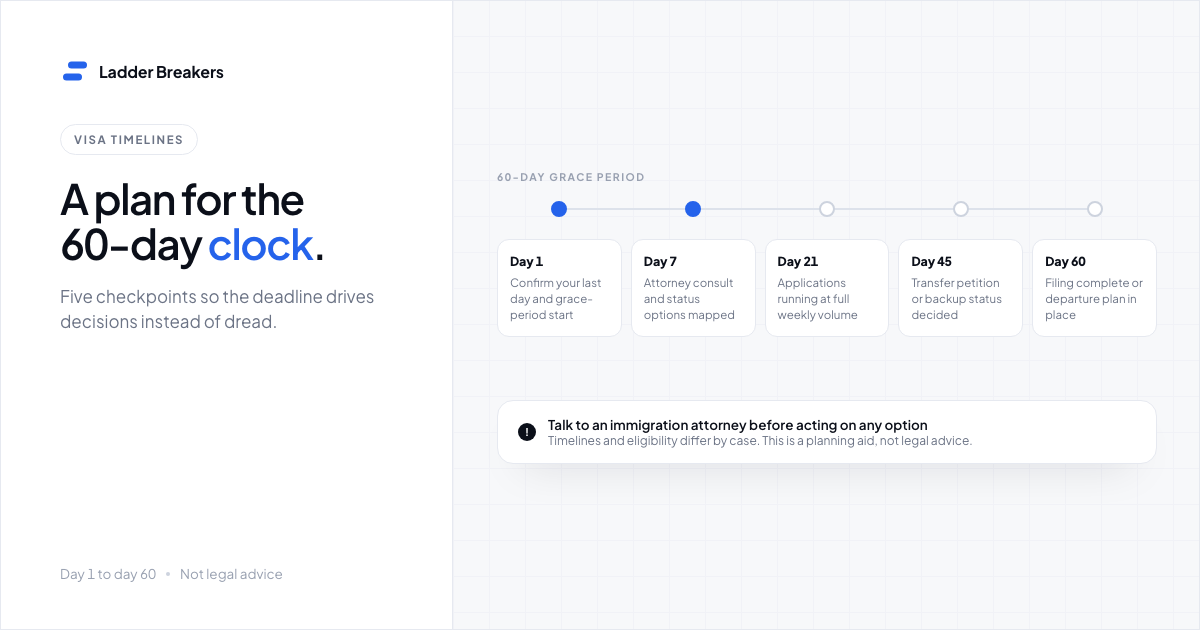
Days 1 to 3: stabilize and document
Confirm your last day of employment, collect termination documents, save pay stubs, download immigration records you are allowed to keep, and write down every relevant date. Then contact an immigration attorney. Do not wait until day 45 to learn that a backup option needed earlier filing.
At the same time, prepare your job-search base: updated resume, target titles, target locations, sponsor-friendly companies, LinkedIn profile, references, and a short explanation of availability.
Days 4 to 21: create sponsor surface area
Your application strategy should prioritize companies with a realistic history of sponsoring similar roles, direct employer postings, warm referrals, and roles that closely match your background. This is not the moment for vague pivots unless you already have strong proof.
Use a two-track system. Track one is high-fit applications every day. Track two is referral and recruiter outreach every day. Applications create reach. Referrals create trust. You need both.
Days 22 to 45: compress interview cycles
If a company shows interest, communicate availability clearly and professionally. Ask about timeline early. For technical roles, keep interview prep daily. For nontechnical roles, prepare tight stories around impact, cross-functional work, and why this exact role fits.
Do not let perfection delay submissions. A tailored good application sent today is usually better than a perfect one sent after the role closes.
Days 46 to 60: execute backups, not panic
By this point, your attorney-guided backup options matter. Depending on your situation, those may involve a change of employer petition, change of status, departure and consular processing, dependent status, study options, or other paths. The correct path is legal and personal, not generic blog advice.
The job-search goal is to keep sponsor conversations alive without ignoring legal deadlines. Ladder Breakers can help with application throughput, but it should sit beside legal counsel, not replace it.
Related Ladder Breakers guides
FAQ
What should I do first during an H-1B grace period?
Confirm your dates, preserve relevant employment and immigration documents, contact a qualified immigration attorney, and start a sponsor-focused job search immediately. This is not legal advice.
Can an application tool replace immigration advice?
No. Application tools can help create more employer conversations, but legal strategy should come from a qualified immigration professional.