Run Your Job Search Like a Sales Pipeline
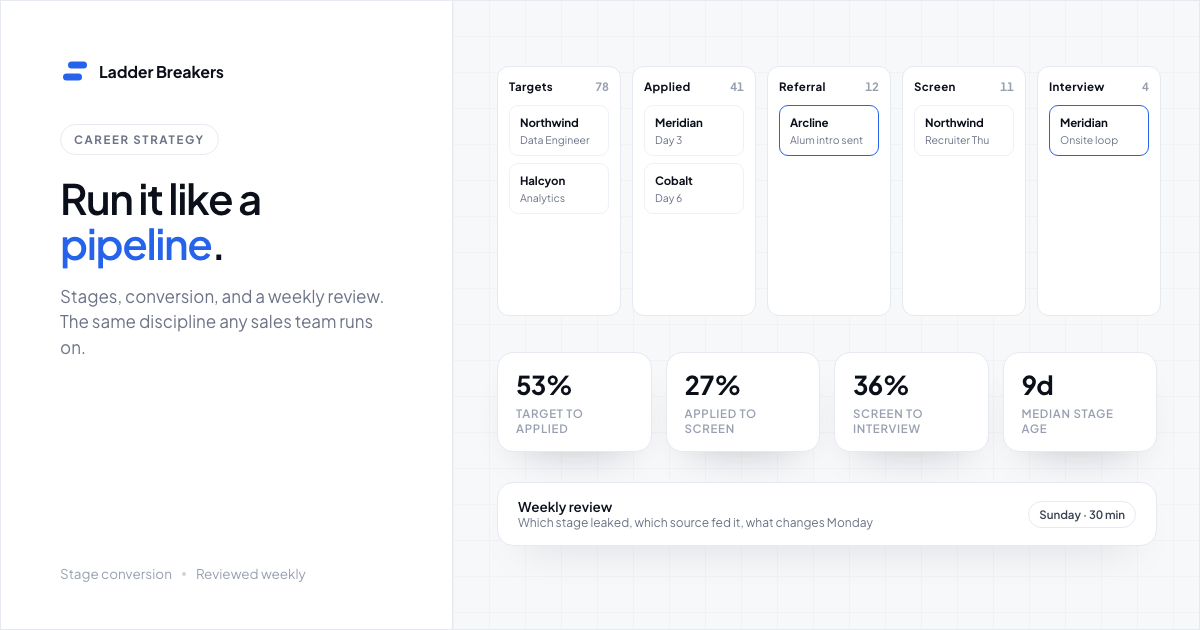
A job search feels less powerless when it becomes a pipeline: leads, qualification, outreach, conversion, follow-up, and learning.
Key takeaways
A job search pipeline turns emotion into observable stages and next actions.
The key metrics are not only applications sent; they include response rate, screen rate, interview rate, source quality, and time in stage.
A pipeline creates hope because it shows what can be improved next.
Why the pipeline frame works
Sales teams do not treat every lead as equal. They qualify, prioritize, follow up, measure conversion, and learn from lost deals. Job seekers can use the same logic without becoming robotic. The point is not to reduce your career to a spreadsheet. The point is to stop guessing in the dark.
A pipeline gives every opportunity a stage and every stage a next action. That makes the search feel less like waiting and more like operating.
Define your stages
A simple pipeline has stages: target found, qualified, resume tailored, applied, referral requested, recruiter replied, screen scheduled, interview, offer, rejected, closed. Each stage should mean something specific. If the next action is unclear, the stage definition is too vague.
For example, "qualified" might mean the role matches your level, location, work authorization constraints, core skills, and career direction. That prevents random jobs from entering the serious pipeline.
Measure conversion, not just effort
Applications sent is an effort metric. It matters, but it is incomplete. Also track response rate, recruiter screen rate, interview rate, offer rate, referral response rate, and source quality. If 100 applications produce zero screens, the system needs diagnosis. If referrals produce five times the response rate, your calendar should reflect that.
Good metrics do not judge you. They point to the next fix.
Create follow-up discipline
Many candidates apply and disappear. A pipeline makes follow-up visible. After applying, you may send a referral note, message a recruiter, add a reminder, or close the role if it goes stale. The point is to avoid leaving promising opportunities unmanaged.
Follow-up should be respectful and specific. Mention the role, the relevant proof, and the reason you are a fit. Avoid desperate walls of text.
Review the pipeline every week
A weekly review asks: which sources created responses, which roles went nowhere, which resume version performed best, where did interviews stall, and what should change next week? That review is where hope becomes practical.
Ladder Breakers is built around this belief: candidates deserve more than a pile of tabs. They deserve a system that keeps creating chances, shows what is working, and helps them keep going with evidence.
Related Ladder Breakers guides
FAQ
What is a job search pipeline?
A job search pipeline is a staged system for tracking opportunities from target found to qualified, applied, referral sent, recruiter screen, interview, offer, rejected, or closed.
What job search metrics should I track?
Track applications sent, response rate, recruiter screen rate, interview rate, referral response rate, offer rate, source quality, and time spent in each stage.
Sources and further reading
- Google Search Central: SEO Starter Guide
- Google Search Central: Helpful, reliable, people-first content
- World Economic Forum: Future of Jobs Report 2025
- NACE Job Outlook 2025
- LinkedIn Research: Talent 2026
- LinkedIn Skills on the Rise 2026
- NACE Job Outlook 2026 Spring Update
- NACE: Demand for AI Skills in Entry-level Jobs Nearly Triples Since Fall 2025